


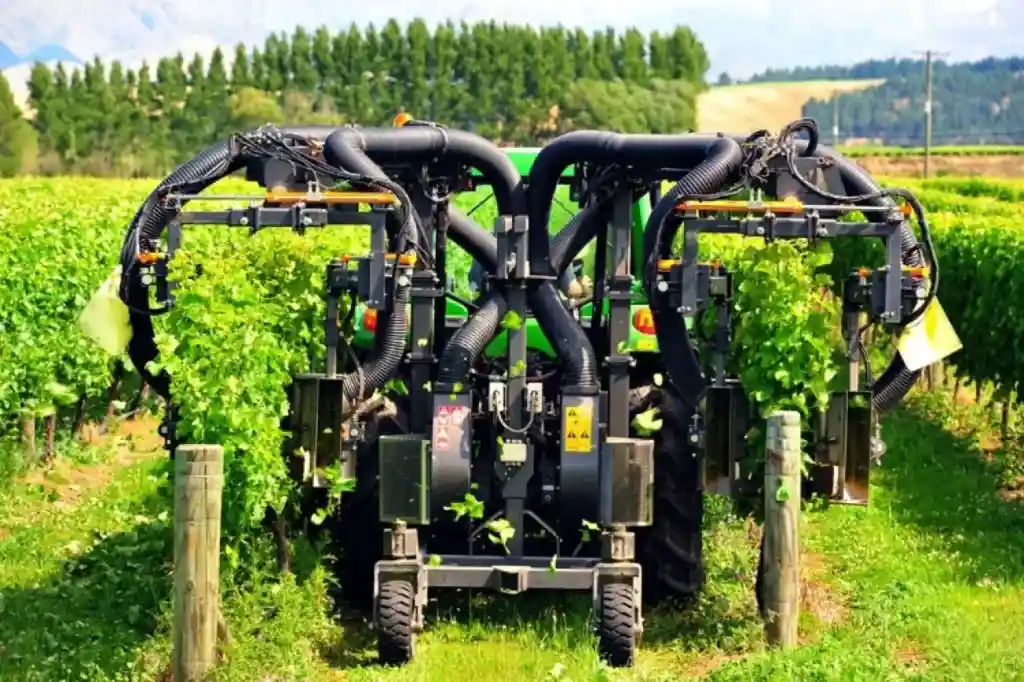
A robot demo can fit inside a launch video. The product has to survive the thousandth task: weak connectivity, sensor drift, an interrupted update, mixed operator languages, and an order that changed after the machine was dispatched. That gap is where much of the commercial advantage now sits.
Hardware determines what a robot can physically do. Software determines how quickly it learns a new workflow, how predictably it performs, how easily an operator can recover it, and whether a company can manage a hundred machines as confidently as one.
This is where Shinetech Software can be useful. We work alongside a client’s mechanical and controls specialists, helping turn the machine into a connected product: product software, AI model integration, task algorithms, data services, IoT fleet operations and links to the business systems around it.
A robot is several software products
The word “robot” hides a stack of systems with different release cycles and failure modes:
- The machine interface connects sensors, actuators, firmware and the robot’s control software.
- The intelligence layer interprets camera, audio and other sensor inputs through computer vision, language or specialist models.
- The task layer plans work, enforces rules, handles exceptions and records what happened.
- The fleet layer manages device identity, configuration, connectivity, telemetry, diagnostics and software versions.
- The application layer gives operators, customers and support teams useful interfaces and connects the robot to ERP, MES, WMS, CRM or other operating systems.
A robotics company may already have excellent control engineers. Its constraint may be the software around the controller: the operator application, the data pipeline, a model evaluation service, remote diagnostics or an unreliable integration with warehouse orders. Those boundaries are often where a multidisciplinary software team creates the most value.
A robot sold globally needs a model strategy that travels
Robotics teams can now choose among hosted foundation models, regional providers, specialist open models and smaller models deployed on a device or private infrastructure. That access is useful, but the winning product decision is rarely “use the largest model everywhere.”
A warehouse robot may need low latency and predictable operation. A service robot may need to understand several languages and accents. A visual inspection system may face different lighting, packaging and labels in each market. Data residency, connectivity, inference cost and provider availability can also change by country.
The practical answer is a model layer that can be evaluated and changed. Shinetech can help build the interfaces, test sets, routing rules, observability and access controls that let a product team compare models against the same operating task. A model can interpret an instruction or propose an action while bounded software checks permissions, machine state and safety conditions before execution.
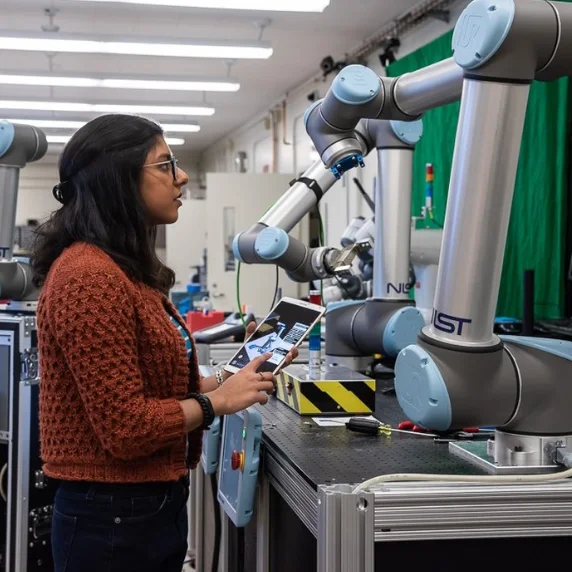
Hugging Face’s LeRobot documentation shows why this separation matters. Its tools cover models, datasets, simulation and real hardware through a hardware-agnostic Python interface, with an explicit workflow from teleoperation and data recording to training and deployment. An open robotics stack does not remove integration work; it makes more of that work reusable and testable.
Algorithms carry the operating knowledge
Foundation models attract attention, but many robot outcomes still depend on narrower algorithms: localization, pose estimation, sensor fusion, path planning, task scheduling, anomaly detection, calibration, recovery and predictive maintenance.
These algorithms encode operational choices. Should the robot wait, reroute or ask for help? How much uncertainty is acceptable before a visual result goes to human review? Which machine should receive the next job? When does vibration indicate maintenance rather than normal variation?
The answers should be measured against the job. Useful metrics include task success rate, time per completed task, false detections, manual interventions, recovery time, energy per task and the share of incidents that can be diagnosed remotely. Model accuracy belongs in that set, but it cannot replace product and operational measures.
Shinetech’s published surface-inspection case is a relevant example of the pattern. The system connected detection, localization, classification and reporting, while keeping engineers in the review loop. It is an industrial computer-vision case, not a robotics deployment. The transferable lesson is that an algorithm becomes valuable when its evidence, confidence and follow-up workflow are visible to the people making the decision.
IoT turns one machine into an operable fleet
One robot can be configured by the team that built it. A fleet needs repeatable operations.
Each device needs an identity and known configuration. Telemetry has to reveal connectivity, battery, sensor health, workload and fault state without overwhelming operators. Updates need targeting, verification, staged rollout and rollback. Machines that lose their connection need to queue data safely and resume without duplicating work.
AWS IoT fleet indexing offers one concrete example of the operating pattern: it can index registry information, device shadows, connectivity, software packages and security findings for search and aggregation. AWS also documents targeted update jobs based on device groups and package versions. A robotics product may use AWS, another cloud or its own infrastructure; the lasting requirement is the same—know the state of the fleet before changing it.
Shinetech has dealt with this kind of boundary between hardware, cloud software and imperfect field conditions. In the published NuPoint customer story, NuPoint brought the agricultural context and an IoT hardware concept. Shinetech extended the software capacity needed to connect equipment, GPS, maps, weather, cloud services and a customer-facing web experience. The team also tested in weak-network conditions. This was agricultural IoT work, not a robot project, but it demonstrates the same need to make a connected physical product dependable outside the office.
The application around the robot is part of the product
Customers do not experience an autonomy stack as a diagram. They experience a task screen, an alert, a delayed job and the quality of support after something stops.
That application layer may let a supervisor assign work, show why a machine paused, request human approval, replay an incident or compare performance by site. Behind it, APIs may connect a robot to inventory, production orders, maintenance history, billing and customer support.
This is conventional software engineering in an unconventional environment. It needs clear product decisions, usable interfaces, secure permissions, resilient integrations, logs that answer operational questions and a release process that respects the physical consequences of a software change.
Shinetech’s aquaculture IoT case provides another adjacent example. The product connected water-quality sensors with mobile monitoring and controls for feeders, aerators and pumps. The value came from joining sensing, software and action in one operator workflow.
Where Shinetech can strengthen a robotics product
Shinetech’s AI-ready development teams and IoT expertise span custom software, APIs, data, computer vision, machine learning and connected-device integration. For a robotics company, that can translate into a focused team for one or more parts of the product:
- product and system architecture across robot, cloud and business software;
- operator, customer and support applications;
- model adapters, evaluation harnesses and controlled AI workflows;
- perception, optimization and decision-support algorithms;
- IoT device services, telemetry, diagnostics and update workflows;
- ERP, MES, WMS, CRM and data-platform integration;
- automated testing, observability and long-term product evolution.
Published evidence, stated precisely
The NuPoint, aquaculture and surface-inspection examples demonstrate connected-device software, computer vision and human-in-the-loop workflows. We describe them as adjacent engineering experience. They are not presented as Shinetech robotics engagements.
Start with one operating constraint
Pick one workflow and define its measurable result. Map the devices, software interfaces, data and failure states involved. Build a thin path through the whole system, test it with representative hardware and field conditions, then expand only after the team can observe and recover that path.
That approach keeps a robotics program grounded. It also makes outside software capacity easier to assess: the work either improves a defined outcome or it does not.
Robotics advantage will not come from a single model call or dashboard. It will come from how well the whole product learns, acts, reports, integrates and improves over time.
Turn the machine into a dependable product
If your team has a robot prototype, specialist hardware or a working control stack and the next bottleneck sits in software, AI integration, algorithms, IoT operations or enterprise connectivity, Shinetech can help define the missing layer, build it with your domain team and carry it into production.
Sources
Research and site evidence reviewed September 6, 2026.
- Shinetech Software — AI-ready dedicated development teams
- Shinetech Software — IoT expertise
- Shinetech Software — NuPoint intelligent farming platform case study
- Shinetech Software — aquaculture IoT monitoring and control case study
- Shinetech Software — AI surface inspection case study
- Hugging Face — LeRobot documentation
- AWS — Fleet indexing
- AWS — Preparing jobs for Software Package Catalog
- NIST — Shelly Bagchi with Robot
- NIST — Copyrights & Disclaimers