Orders need too much manual follow-up
Sales, planning, and shipping re-enter information or chase updates across separate systems.


Software for growing manufacturers
Modernize legacy systems to support new capabilities, connected operations, and easier online ordering. Our engineers use AI to uncover existing business rules and deliver improvements in manageable stages, with your team validating each change.
Start with the operational bottleneck
Your ERP may still do its core job. The friction often sits between departments, inside a custom application, or in a process only a few people understand.
Sales, planning, and shipping re-enter information or chase updates across separate systems.
Planners rely on spreadsheets because purchasing, inventory, and shop-floor records do not agree.
Customer exceptions, quality checks, and reporting rules are buried in code or undocumented workarounds.
Aging frameworks, fragile integrations, and slow applications make routine improvements expensive.
Recover the business knowledge
Our engineers use AI to analyze code, databases, interfaces, and configuration, then connect the findings in a business knowledge graph: a map of how your workflows, rules, and data depend on each other.
A quality hold prevents shipment until an authorized person releases it.
Application rule → quality record → shipping integration → observed behavior
You review a prepared map and focused questions with our team. Together, we identify rules to preserve, outdated behavior to change, and manual work the system does not capture. The map then guides development, testing, and future AI opportunities.
From shared understanding to working software
Each stage has a defined outcome for your team to review. AI accelerates analysis and implementation; engineers remain responsible for the design, verification, and release.
Rank improvements by operational value, dependencies, and risk. Decide what to retain, connect, upgrade, or replace. Separate existing rules from intentional business changes.
You review: A phased roadmap, scope, responsibilities, and an estimate for the first stage.
Engineers use AI to build prototypes and small, reviewable increments. Your team sees the workflow early and provides feedback before the change expands.
You review: Working software against agreed acceptance criteria.
Build tests from confirmed rules from the start. Cover normal work, exceptions, permissions, and downstream effects, such as partial shipments or a rejected material lot.
You review: Test evidence, open issues, and comparisons with current behavior.
Use AI to accelerate data mapping, conversion scripts, and reconciliation. Migration tools move and synchronize records. Validate old and new results in parallel where feasible.
You review: Reconciled data, cutover readiness, and a recovery plan.
Use automated delivery practices, or DevOps, for repeatable builds, tests, and deployments. Monitor live behavior and plan application rollback and data recovery together.
You review: Release records, operating guidance, support ownership, and the next priorities.
Protect daily operations
Plan the transition around shifts, production schedules, shipping commitments, and financial close. Agree on the evidence and operating conditions for each release.
Talk through your operating constraintsCompare approved scenarios across systems, including exceptions and connected equipment or applications.
Check quantities, units, relationships, historical records, and business totals—not just record counts.
Define the authoritative source and writing permissions to prevent duplicate shipments, invoices, or inventory movements.
Set monitoring, stop conditions, and recovery steps that account for transactions already processed.
Relevant delivery experience
Explore how Shinetech teams have handled connected equipment, historical data, and departmental systems.
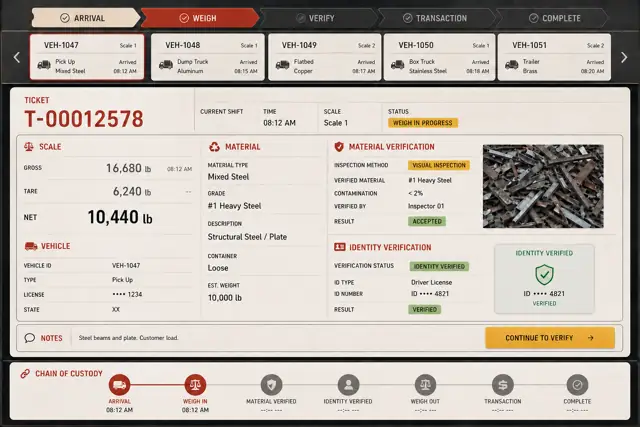
Recycling operations
Incremental modernization addressed performance and integration across weighing, identification, pricing, and business systems.
Read the recycling case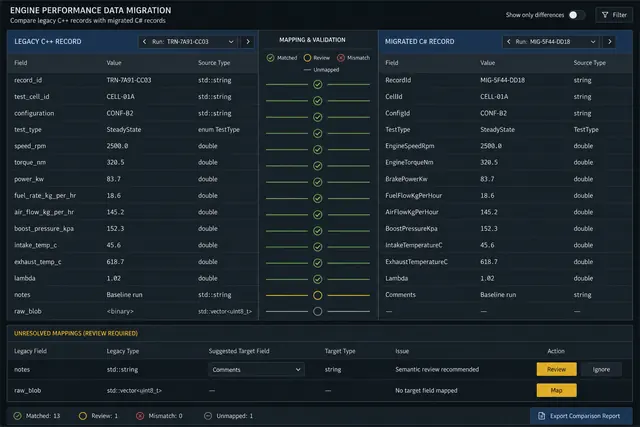
Automotive manufacturing
A C++ to C# migration combined pre-migration analysis with manual scenarios and repeatable automated testing.
Read the data migration case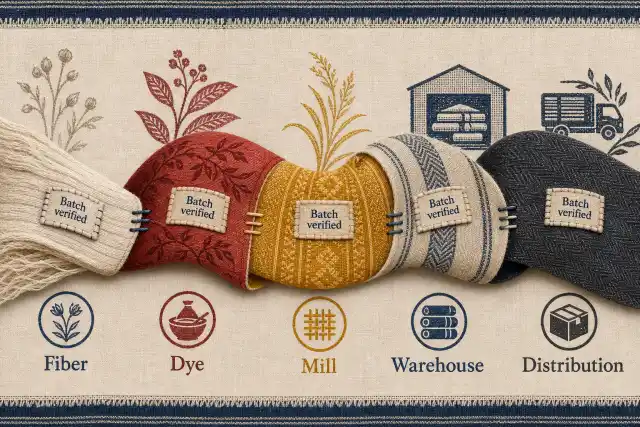
Textile manufacturing
A shared integration layer connected departmental workflows while preserving existing database structures.
Read the supply chain caseCase illustrations show the workflows described.
An optional next step
The business map helps identify work that involves repeated searching, reading, or coordination. Our forward deployed engineers work with your operations team to select a focused pilot and connect it to the right systems.
Find trusted answers
Help staff find approved procedures, product specifications, and troubleshooting guidance. Retrieval-augmented generation (RAG) grounds answers in company sources, with citations and access permissions.
Evaluate: Answer accuracy and time spent finding information.
Explore enterprise knowledge basesReduce document handling
Extract details from supplier documents, summarize quality reports, or prepare responses to customer requests. Route uncertain results and required decisions to the right person.
Evaluate: Handling time, extraction accuracy, and correction effort.
Explore workflow automationCoordinate across systems
Let an agent gather order, inventory, and delivery information, flag an exception, and prepare the next action. Define which actions it may execute and which need human approval.
Evaluate: Task completion, exception resolution, and review effort.
Work with an embedded AI engineerAI-assisted engineering does not require AI in your live system. Keep fixed calculations and mandatory controls in conventional software. Start an AI pilot when the data, interfaces, and business case are ready—even while other modernization work continues.
Questions before you start
Bring your operational priorities. We will help turn them into the right technical questions.
Not necessarily. We assess which parts can stay, which need an upgrade, and where an integration or a focused replacement will solve the problem. The roadmap follows your operational priorities, existing investments, and support requirements.
Yes. Our engineers use AI-assisted analysis of available code, databases, interfaces, and configuration to reconstruct a business knowledge graph. We validate it against system behavior and discussions with your team, including manual workarounds that code alone cannot explain.
We agree on the people and review points during scoping. Your team helps confirm critical rules, choose priorities, and review working increments. We bring a prepared business map, specific questions, and test results so each discussion has a clear purpose.
Where the architecture allows it, we compare the same business scenarios in both systems before switching a workflow. We define which system can write records and trigger actions, how changes are synchronized, and what must pass before cutover. Any required downtime is planned with your team.
We agree on permitted tools, model access, data handling, and retention requirements before analysis begins. Access is limited to the approved scope. Engineers review generated changes, and confidential records are minimized or masked where appropriate.
No. Using AI to help engineers deliver the project is separate from adding AI to your business. You can modernize without introducing a runtime AI model. If you choose a business AI pilot, we agree on its purpose, data access, human approvals, and measures of success.
We start with system access, business priorities, integrations, data condition, and operational constraints. Discovery produces a phased scope, assumptions, dependencies, and an estimate for the first delivery stage. Later stages are refined as the team verifies the system and your priorities.
Your first conversation
Tell us where work slows down, which systems are involved, and what must keep running. We will discuss the initial assessment, the people to involve, and a sensible first delivery scope.
Useful context: your main bottleneck, current applications, and any upcoming deadline.
Get in touch
Tell us what you need to build, modernize, automate, or augment with AI. We can start with a focused discussion or a no-risk 1-week trial.

“A fantastic company to work with.” After the initial rapid development project, American Shipping Co. kept two Shinetech developers embedded for nearly four years, supporting internal and external tools and new AI initiatives.
 CEO, American Shipping Co. - 5-star Google Review