3D context
Tower models gave captured information a spatial reference.


Telecommunications · Tower inspection visualization
Shinetech developed 3D models and HoloLens software that brought drone-captured tower imagery, signal simulations, and equipment condition into a spatial inspection view.
The business context
A telecommunications inspection solution used drone flights to collect images and signal data around tower sites. For the engineer reviewing that material, the important question was how an observation related to the equipment on the tower and which part needed closer attention.
The client needed a panoramic way to examine those relationships. Shinetech contributed the 3D modeling and HoloLens application to an Azure-based solution, turning inspection information into a spatial view that an engineer could explore. The focus of the engagement was the software experience around captured data.
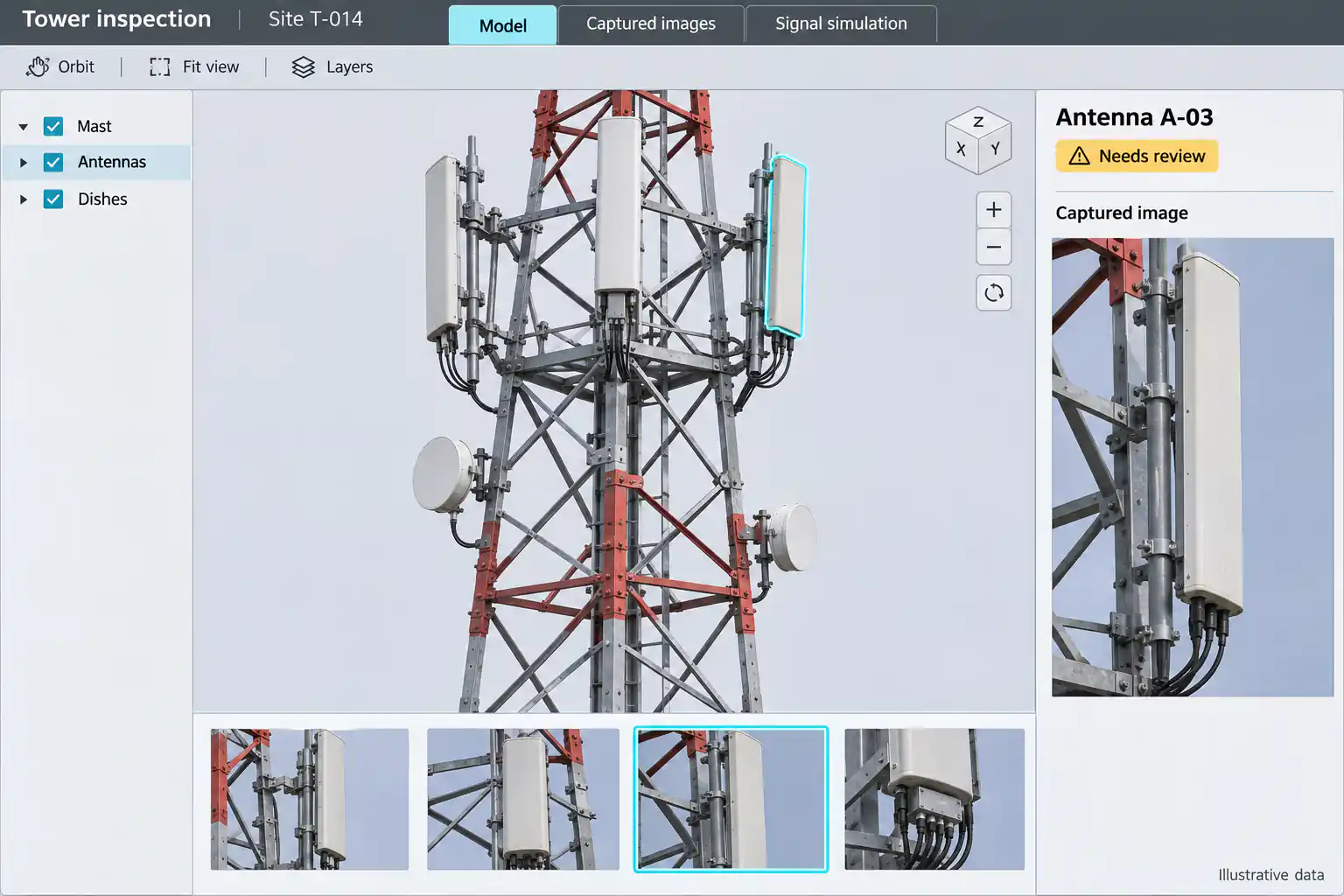
Concept reconstruction using a fictional tower, asset labels, and images. It illustrates the relationship between inspection material and the model; it is not a customer screenshot. View full-size interface (new tab)
The operating challenge
A tower is a three-dimensional arrangement of structural members, antennas, and other equipment. A close-up image contains useful detail, but reviewing condition also calls for an understanding of where that detail belongs. The application needed to preserve the relationship between the structure and the information being examined.
Image evidence, a signal-test simulation, and a displayed damage state also serve different purposes. Bringing them into one inspection experience meant giving engineers a way to see each in context while keeping the engineering interpretation with the person reviewing the site.
The delivery decisions
Shinetech created 3D models for the HoloLens presentation. The models provided the tower context in which captured inspection information could be viewed, connecting the overall structure with the equipment being examined.
The HoloLens software presented imagery and signal information collected during drone inspection. This gave the engineer a panoramic way to examine equipment condition within the client's inspection solution.
The application supported signal-test simulation and the display of damage status. These views helped engineers identify areas requiring maintenance, with the software supporting review rather than making the maintenance decision.
The working detail
The 3D model supplied the spatial reference. Captured data supplied observations from the inspection. Signal simulation and condition displays added views that the engineer could examine. Keeping those roles clear is what makes a spatial presentation useful to a technical user.
Shinetech's contribution covered the models and HoloLens software within the client's wider solution. The resulting capability was demonstrated at a Microsoft technology event in 2016. The case describes that historical software delivery, with inspection interpretation remaining an engineering task.
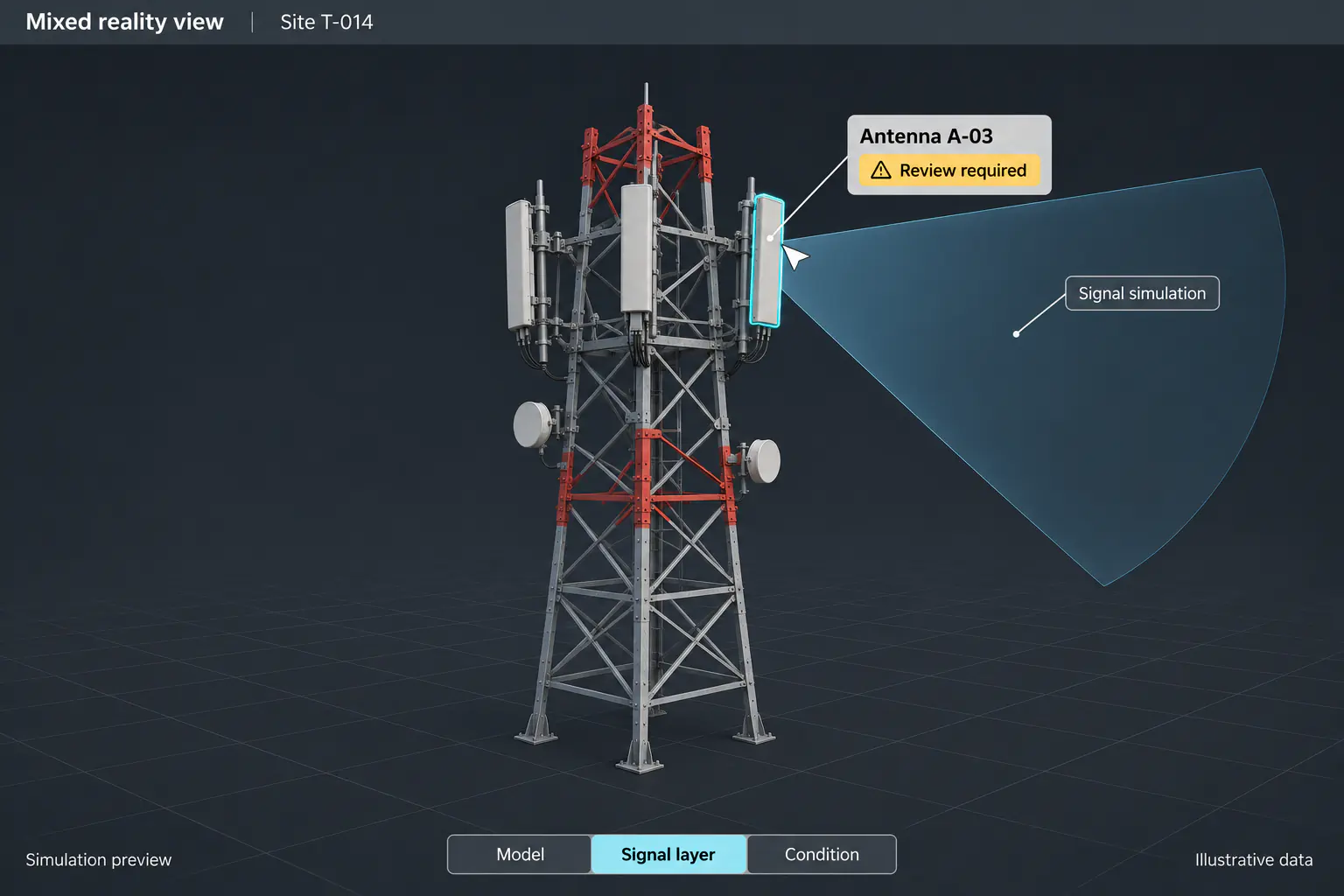
Illustrative application view using the same fictional tower. The signal layer is a visual example, not a measured coverage result or an automatic defect-detection output. View full-size interface (new tab)
The delivered result
Tower models gave captured information a spatial reference.
HoloLens software presented imagery, signal simulation, and equipment condition.
The application supported identifying the parts that required maintenance.
The delivered scope was 3D modeling and inspection visualization software. Flight control, automated defect detection, and measured maintenance outcomes are outside this case.
Case taxonomy
Discuss your project
Tell us how your business works and where your software needs to change.
Get in touch
Tell us what you need to build, modernize, automate, or augment with AI. We can start with a focused discussion or a no-risk 1-week trial.

“A fantastic company to work with.” After the initial rapid development project, American Shipping Co. kept two Shinetech developers embedded for nearly four years, supporting internal and external tools and new AI initiatives.
 CEO, American Shipping Co. - 5-star Google Review