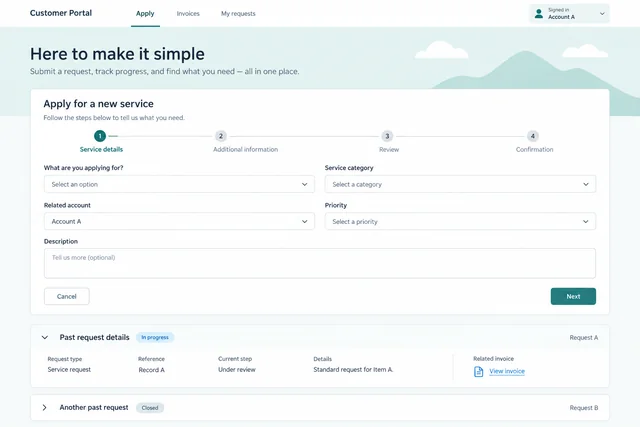
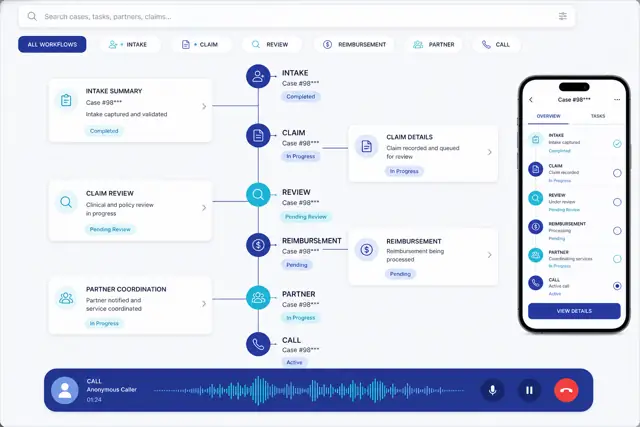
Portal in use
Clinics were activated on the delivered portal and could begin entering information.


Healthcare · Application services
A clinic-facing portal connected application entry to an existing CRM, replacing delayed polling with event-driven updates and giving a service business a workable path from takeover to launch.
The business context
The client helps people prepare applications to access retirement savings for medical treatment. Clinics are part of that service chain: they introduce the request and supply information, while a service team manages the application work in its CRM. The software’s job is to keep those participants working from the same information. It does not decide whether an application will be approved.
The business already had a CRM and an unfinished portal, but the earlier implementation had taken too long and left recurring problems. Shinetech took over the existing code and built out the clinic-facing entry point. The goal was to connect the way clinics submit information with the way the service team already worked, within an agreed budget.
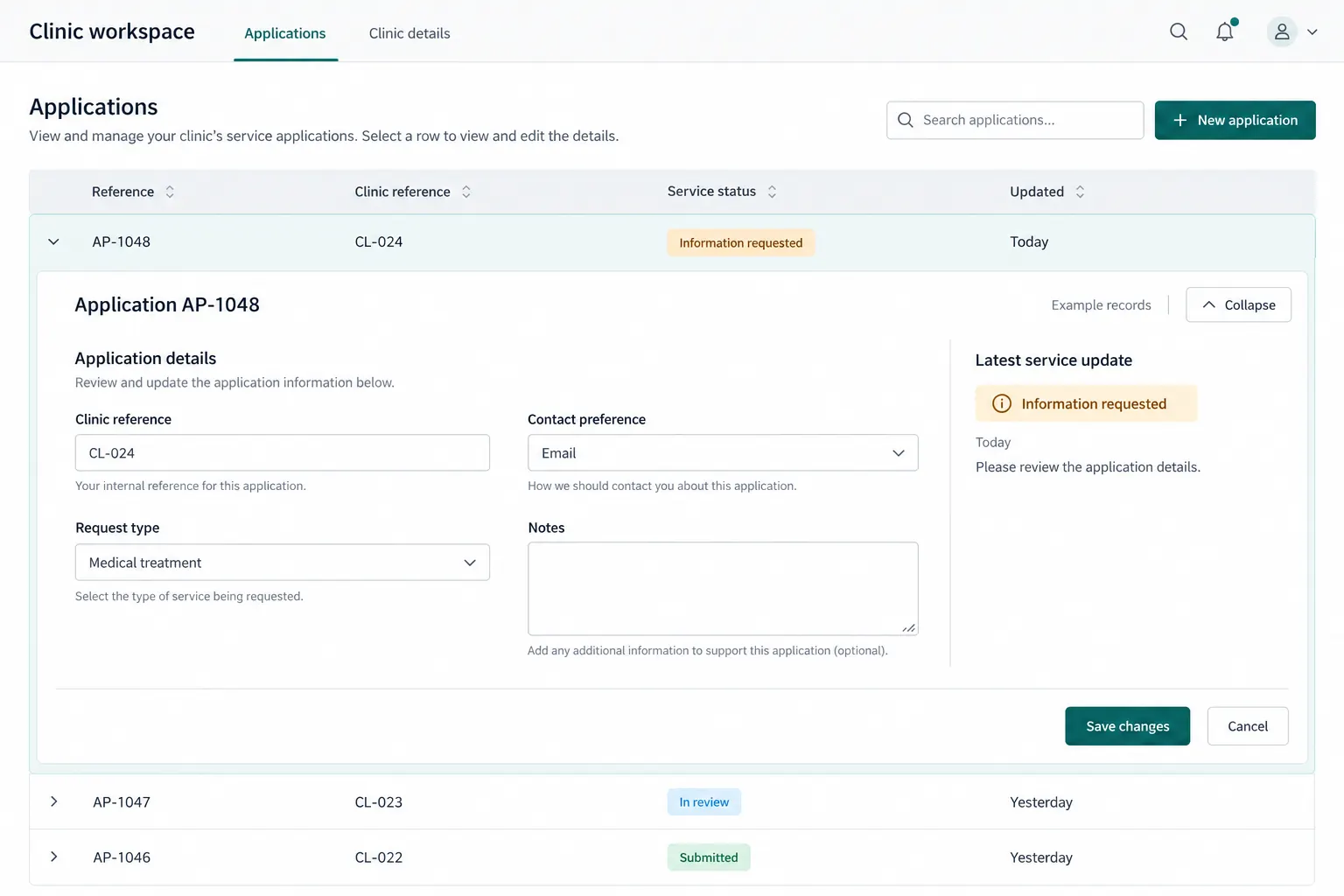
Application entry and the latest service record appear in one clinic workspace. Reconstructed interface with fictional records; not the client’s screen. View full-size interface (new tab)
The operating challenge
Periodic CRM polling left a gap between a record changing and that change appearing in the connected workflow. For an application service, stale information can make a follow-up call harder: the clinic and the service team may be looking at different versions of the same request.
The first engineering task was to understand the inherited code, the application process, and the CRM’s behavior together. A new form alone would not resolve the handoff. The connection had to reflect relevant changes in the underlying service records without making staff wait for the next scheduled data pull.
The delivery decisions
The team examined the inherited implementation alongside the client’s operating process. Weekly discussions helped separate urgent defects from useful improvements, so a constrained takeover could produce a usable release without expanding into a replacement of every business system.
The portal provided a dedicated place to enter application information. Keeping that intake connected to the established CRM meant the service team could continue its work in a familiar environment, rather than maintaining a second disconnected set of records.
Shinetech replaced the previous polling approach with CRM webhooks. Relevant CRM events could initiate synchronization instead of waiting for a scheduled retrieval. This addressed the information delay at the connection between systems, rather than disguising it with a refreshed screen.
How the workflow holds together
When clinic information and CRM records agree, staff can discuss the next application task with more confidence. A synchronized record tells them what information has reached the service team; application progress tells them where the work stands. Keeping those meanings clear helps both sides coordinate the next step.
The portal went live and clinics began using it. After launch, the engagement moved into maintenance and occasional enhancements. Continuity mattered: later changes could be evaluated against the same workflow and codebase that the team had helped stabilize.
The delivered result
Clinics were activated on the delivered portal and could begin entering information.
CRM events replaced the earlier scheduled polling approach for data synchronization.
Maintenance and targeted enhancements followed the initial release.
The launched portal gave clinics an entry point into the service workflow, with CRM synchronization and continued maintenance supporting the handoff.
Case taxonomy
Discuss your project
Tell us how your business works and where your software needs to change.
Get in touch
Tell us what you need to build, modernize, automate, or augment with AI. We can start with a focused discussion or a no-risk 1-week trial.

“A fantastic company to work with.” After the initial rapid development project, American Shipping Co. kept two Shinetech developers embedded for nearly four years, supporting internal and external tools and new AI initiatives.
 CEO, American Shipping Co. - 5-star Google Review