Requirements
A business requirements specification documented processes, functional scope, and the transport-damage need.


Manufacturing · Discovery and solution design
A sanitaryware manufacturer received a business requirements specification and solution architecture connecting procurement, production, transport, and settlement, with a defined place for transport-damage records. The engagement stopped at design.
The business context
For a manufacturer of fragile ceramic products, transport damage connects a physical item with a shipment, a customer order, and a financial consequence. Counting damaged units in isolation would not explain which products and deliveries were involved or how that information related to the wider business.
The client used separate systems for procurement, inventory, production, logistics, and finance. Staff moved between them to check related information, while the existing tools did not meet the need for structured transport-damage tracking. Shinetech was engaged to turn that integration ambition into defined requirements and an architecture for future implementation.
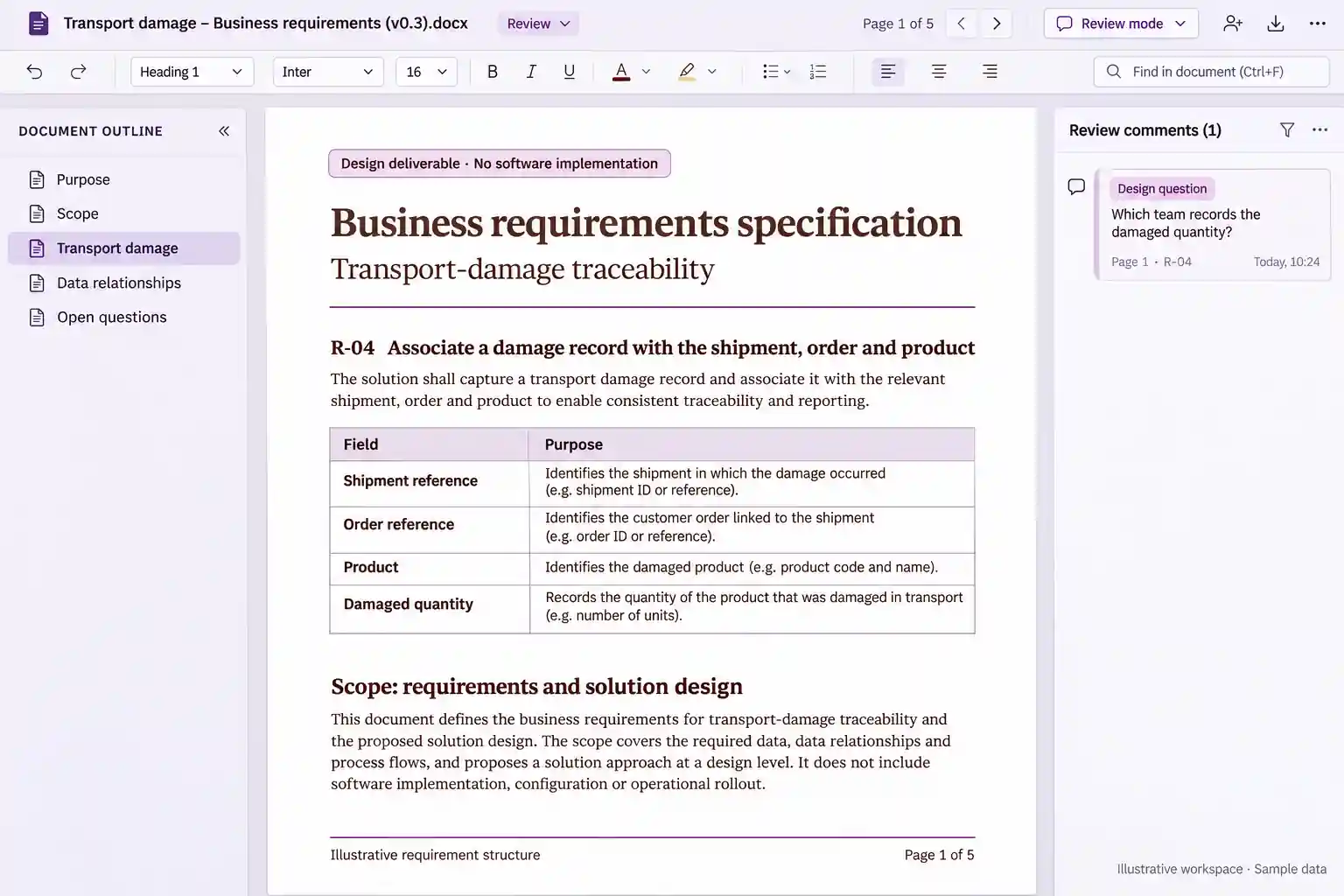
Illustrative requirements document in a fictional review tool. Requirement identifiers, field definitions, and comments are reconstructed to explain the consulting scope; this is not a client document or a delivered operational application. View full-size interface (new tab)
The operating challenge
A broad request to connect systems did not yet define the relationships a future platform would need. Procurement, stock, production, transport, and settlement each had their own responsibilities. The design work had to explain how those responsibilities would connect without confusing the desired system with something already built.
Transport damage made the need concrete. The client wanted damaged quantities and damage-rate analysis to relate to products, orders, and transport batches. That required business definitions and planned data relationships before development could be estimated or assigned.
The delivery decisions
The team reviewed the flow from materials procurement through production, delivery, and collection of payment. It identified the responsibilities of existing systems, repeated checking, and gaps at their handoffs.
The business requirements work defined the need to record damage, associate it with relevant products and transport batches, and support later statistics and analysis. These were requirements for a future platform, not measured capabilities of an implemented one.
The architecture organized procurement, inventory, production, transport, and finance modules with their planned relationships. The team discussed the proposed scope with the client and delivered the requirements and architecture documents for subsequent technical evaluation and planning.
The working detail
A damage statistic only becomes useful when the business knows what was damaged and how the record relates to a product, shipment, and order. The engagement addressed that need through requirements and data relationships, rather than presenting an unbuilt reporting screen as an outcome.
The same design work provided a common reference for later development estimates, project planning, and supplier evaluation. It established what the future system should cover and how its major responsibilities should connect. Software construction and operational validation were outside the completed engagement.
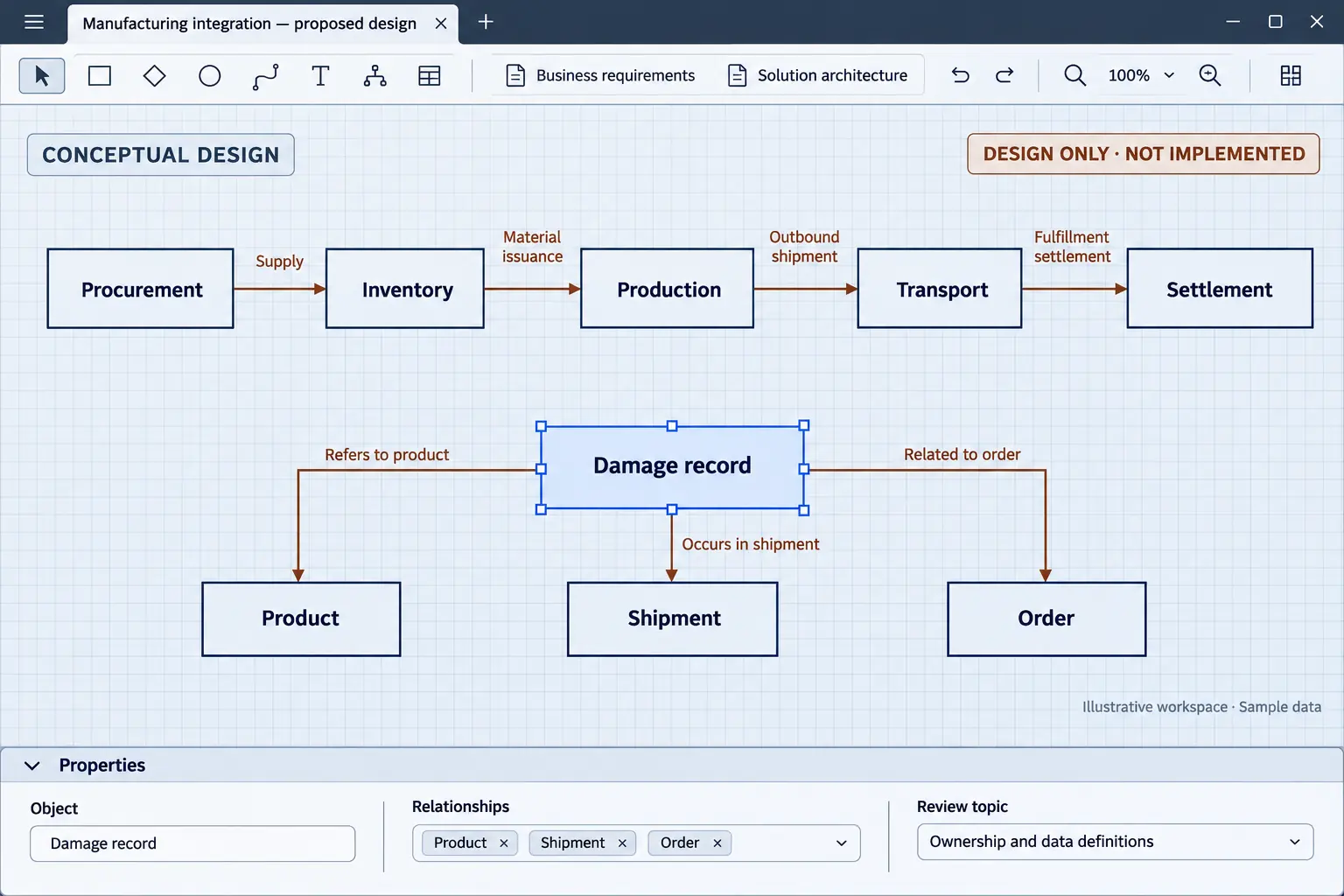
Conceptual architecture shown in a fictional diagram editor. The module arrangement and sample labels explain the intended relationships; they are not a reproduction of the client's architecture and do not indicate a deployed integration. View full-size interface (new tab)
The delivered result
A business requirements specification documented processes, functional scope, and the transport-damage need.
A solution architecture document described the planned modules and their relationships.
The reviewed documents could support later evaluation, estimation, and implementation planning.
This was a business-discovery and solution-design engagement. No software development, deployment, live damage-tracking capability, reduction in breakage, or financial improvement is claimed.
Case taxonomy
Discuss your project
Tell us how your business works and where your software needs to change.
Get in touch
Tell us what you need to build, modernize, automate, or augment with AI. We can start with a focused discussion or a no-risk 1-week trial.

“A fantastic company to work with.” After the initial rapid development project, American Shipping Co. kept two Shinetech developers embedded for nearly four years, supporting internal and external tools and new AI initiatives.
 CEO, American Shipping Co. - 5-star Google Review