Player access
Store and library experiences were supported across mobile and VR.


Media & Entertainment · VR platforms
Shinetech contributed to a VR content platform connecting player purchases and libraries with game submissions, platform administration, and developer statements and payouts.
The business context
The client develops VR hardware, but the software experience extends beyond a device. Players need to discover and buy games, find purchased titles in their library, and launch them. Game developers need a route to submit content and understand its commercial performance. Platform administrators manage the catalog, users, orders, and revenue.
Shinetech contributed development support within the client’s product team. The work connected mobile and VR player experiences with developer and administrator web applications, backed by services for payments, orders, reporting, and content operations.
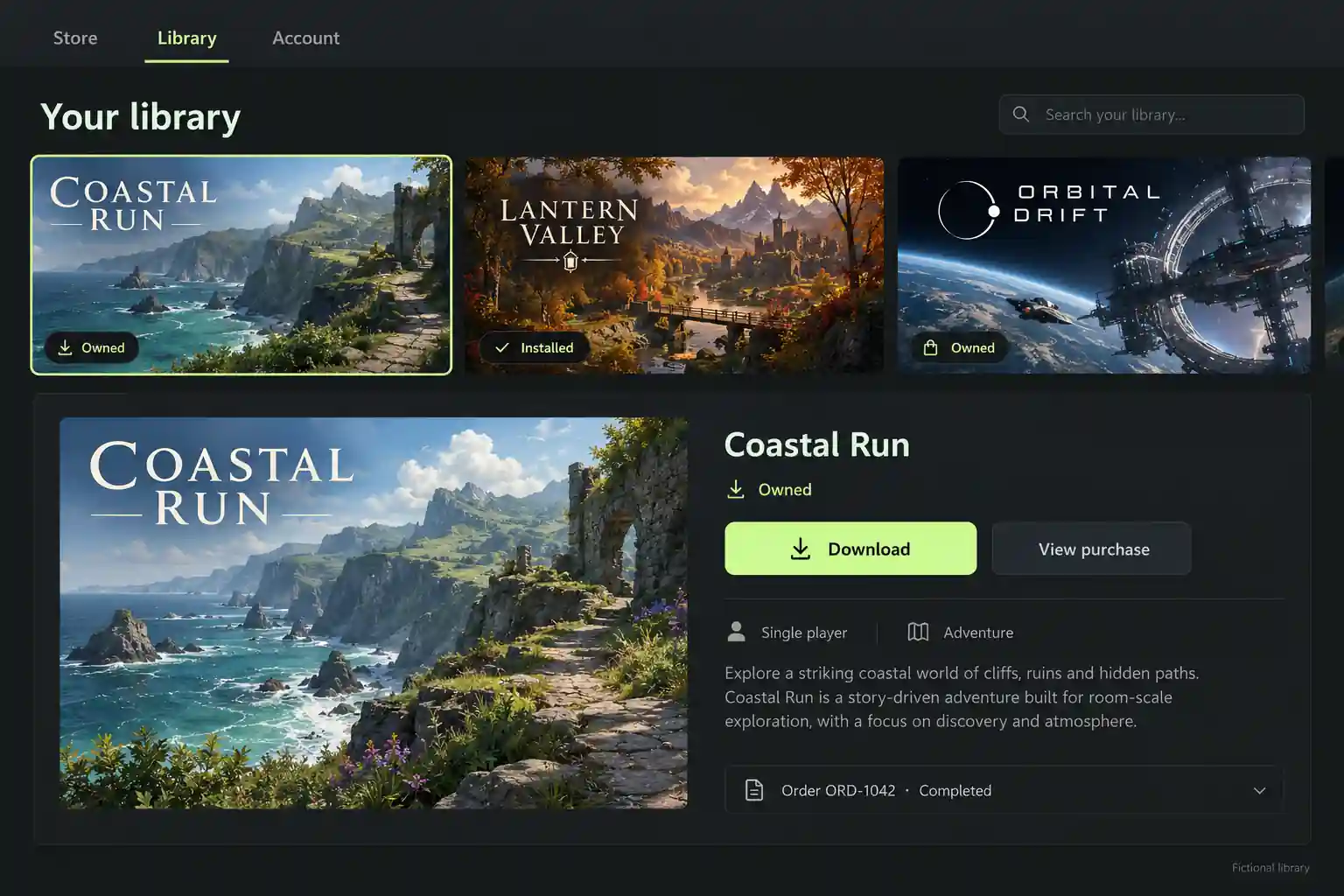
A fictional companion-app library keeps owned titles distinct from available store content. Reconstructed interface with invented game artwork and records; not the client’s product. View full-size interface (new tab)
The operating challenge
A game purchase belongs to the player’s account and library. It also becomes part of the platform’s order records, revenue reporting, and payments to developers. Those responsibilities span different applications and user roles, so implementing each screen independently would miss the relationships that make the transaction meaningful.
The integration work also reached beyond the software team. Customized headset interfaces, coordination with the hardware team, and APIs for game developers had to support the same product experience. The challenge was to contribute across those boundaries while keeping each application’s responsibilities clear.
The delivery decisions
The mobile application and VR launcher provided the store and game library, alongside related account and social features. Purchases and memberships were part of the service behind those experiences, rather than isolated storefront interactions.
Developer web applications supported game upload, review submission, sales visibility, and user reviews. Administrator tools handled users, games, and developers. Each role had a different task in bringing content onto the platform and keeping it available.
Backend services integrated game and membership payments with order management, developer payments, and statement generation. Revenue reporting supported both platform administrators and developers, making the commercial record part of the product’s operating scope.
How the workflow holds together
The platform combined backend services, web interfaces, mobile applications, and a VR launcher. Automated tests covered multiple layers of that stack. Checking an individual screen was only one part of the work; the applications also had to interact correctly with the services behind purchases, libraries, and administration.
Development included coordination with the headset supplier, the internal hardware team, and game developers. That work connected device-specific interfaces and developer APIs with the broader product experience. Shinetech’s contribution remained part of the client’s wider product-team effort through delivery into operation.
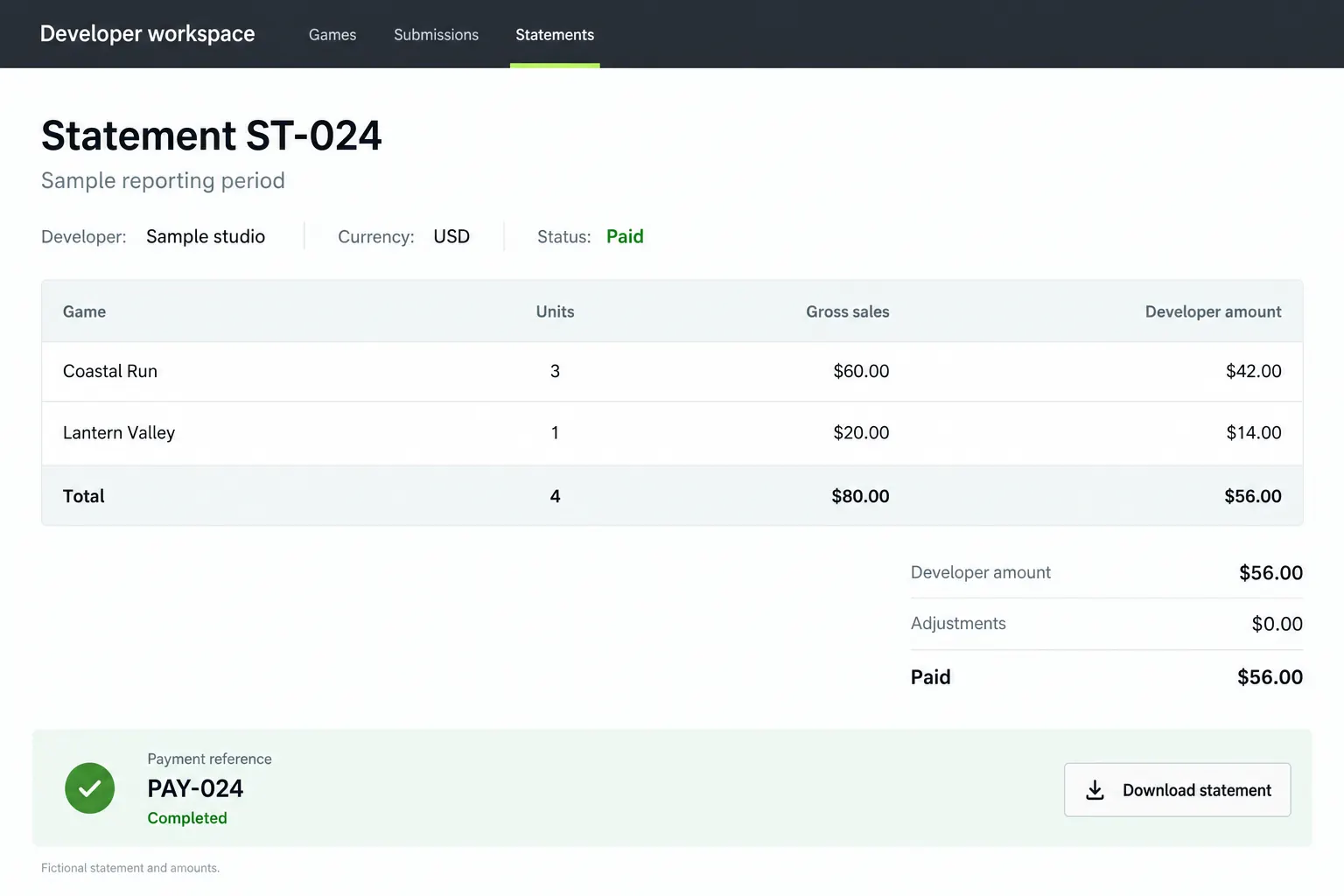
A fictional developer statement connects game-level sales to a payment record. All amounts and commercial terms are illustrative; they are not the client’s fees or revenue. View full-size interface (new tab)
The delivered result
Store and library experiences were supported across mobile and VR.
Content submission, sales views, reviews, and statements supported developer operations.
Orders, payments, reporting, and administration connected the product’s commercial work.
The systems had entered operation by the end of the engagement, with player access, publisher tools, and administrative services supporting distinct parts of the platform.
Case taxonomy
Discuss your project
Tell us how your business works and where your software needs to change.
Get in touch
Tell us what you need to build, modernize, automate, or augment with AI. We can start with a focused discussion or a no-risk 1-week trial.

“A fantastic company to work with.” After the initial rapid development project, American Shipping Co. kept two Shinetech developers embedded for nearly four years, supporting internal and external tools and new AI initiatives.
 CEO, American Shipping Co. - 5-star Google Review