Connected views
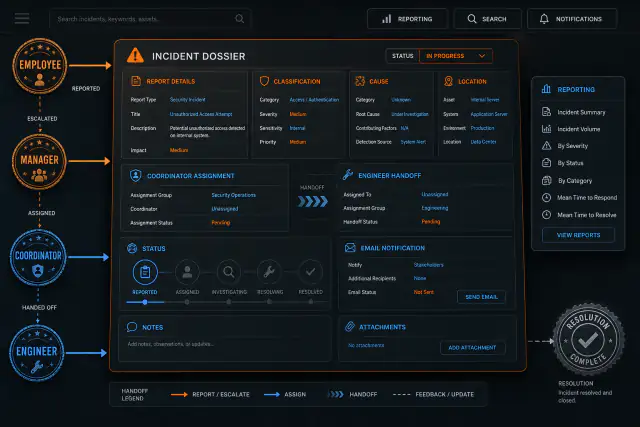
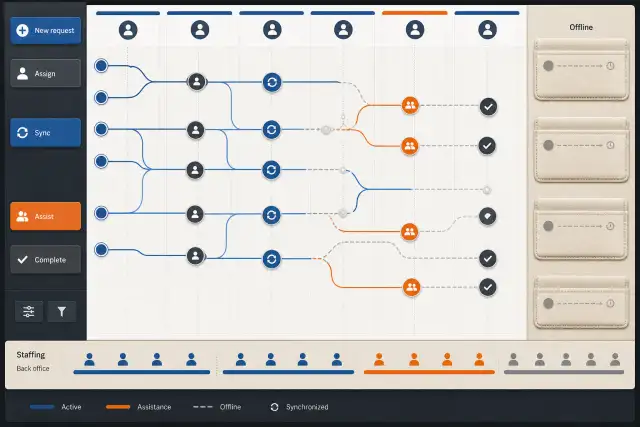
Personnel, equipment, location, alarms, events, and video were supported in one platform.


Manufacturing · Industrial safety operations
A safety-equipment business brought personnel, assigned devices, alarms, and event history into connected web and mobile applications, including offline tablet records and later synchronization.
The business context
A safety-equipment manufacturer served firefighting, rescue, and industrial safety environments. Its users worked with different kinds of devices, including gas detectors, pressure instruments, thermal cameras, and wearable equipment. Information about people, devices, alarms, and events was spread across existing systems.
Shinetech helped develop a common monitoring environment across web, mobile, and tablet applications. The purpose was to connect the equipment information with personnel, team organization, locations, and event history, giving users a more coherent view of the activity they were managing.
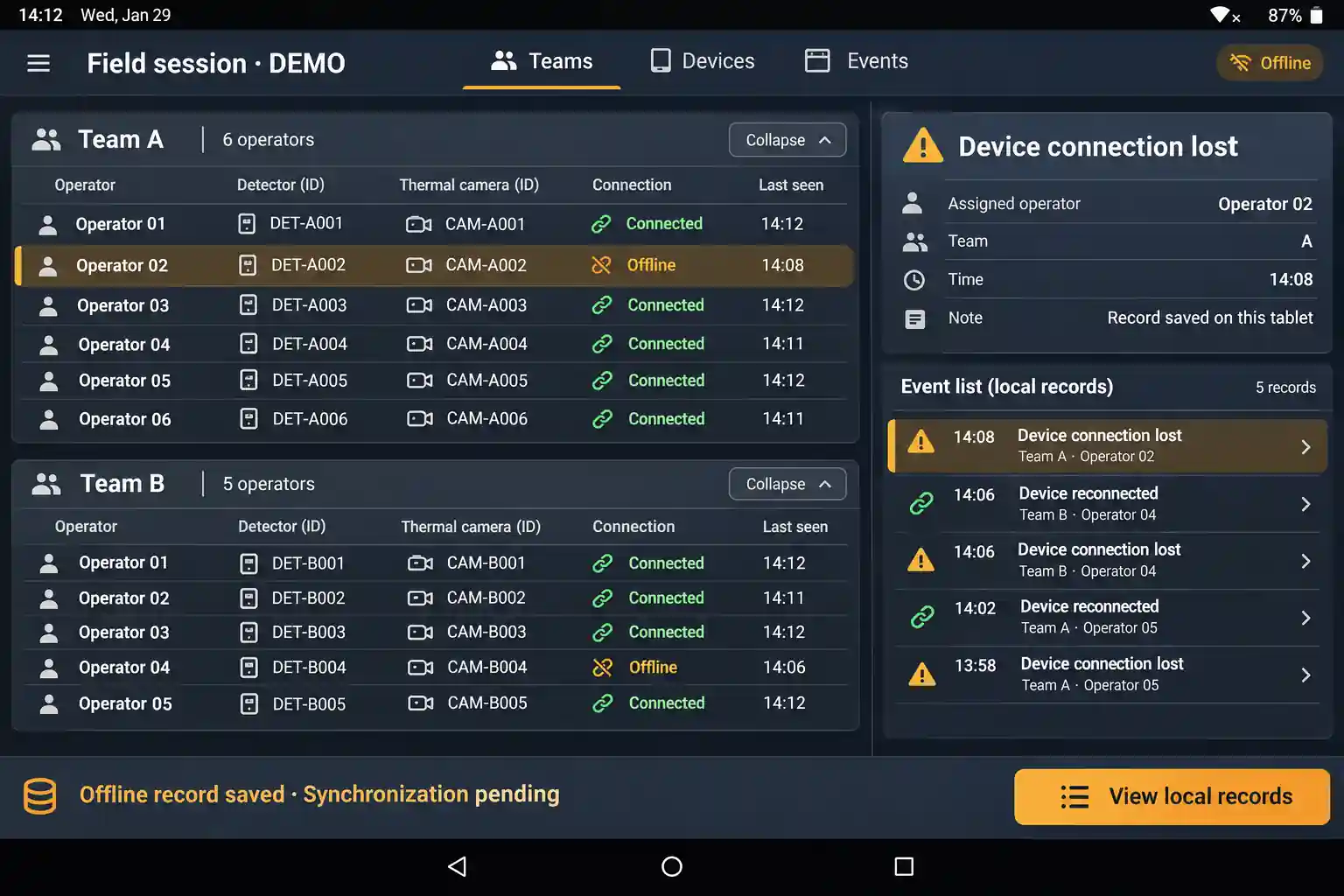
This concept uses invented teams, devices, and events. It shows no real incident, facility map, operational threshold, or safety instruction. View full-size interface (new tab)
The operating challenge
Different device families produced different statuses and observations. The platform needed to present those readings alongside device assignments, people, and alarms. An isolated sensor value could not explain which person or operation it belonged to.
Field connectivity introduced another boundary. Tablet users needed offline event recording followed by synchronization, while web and mobile users worked with related information. Permissions, team groups, device allocation, and account access also had to fit the workflow. Screen size, language, and dark-mode requirements reflected the conditions in which the software would be used.
The delivery decisions
Device integration services supported multiple equipment types, while device, event, map, and video views organized the resulting information. The platform brought device status and observations together with the people and assignments needed to interpret them.
A tablet mode supported offline event recording and later synchronization. Online and offline behavior were treated as related parts of the product, rather than assuming every field interaction would have an uninterrupted cloud connection.
Development proceeded through requirements, design reviews, functional tests, device integration, field feedback, and multi-device acceptance. Team administration and permissions were developed alongside the monitoring features so that daily use could be managed.
The working detail
The engagement combined software issue tracking with device testing and multi-endpoint checks. This helped the team examine the behavior users would encounter across browsers, phones, tablets, and connected equipment.
The central relationship was between a person, an assigned device, and the record of what happened. The case focuses on that software capability. It does not claim that the platform replaces professional safety procedures, certifies equipment, or has been proven to reduce incidents.
The delivered result
Personnel, equipment, location, alarms, events, and video were supported in one platform.
The tablet delivery included offline recording and subsequent synchronization.
Teams, device assignments, and account permissions became part of the delivered scope.
The project account confirms core functionality across the web, mobile, tablet, and administration products. Safety outcomes and independently measured reliability remain outside the evidence.
Case taxonomy
Discuss your project
Tell us how your business works and where your software needs to change.
Get in touch
Tell us what you need to build, modernize, automate, or augment with AI. We can start with a focused discussion or a no-risk 1-week trial.
“A fantastic company to work with.” After the initial rapid development project, American Shipping Co. kept two Shinetech developers embedded for nearly four years, supporting internal and external tools and new AI initiatives.
 CEO, American Shipping Co. - 5-star Google Review