Connected records
Orders and verification records could be looked up together instead of reconciled through separate spreadsheets and messages.


E-commerce & Retail · Verified marketplace
A collectible marketplace connected physical item inspection, buyer confirmation, and seller settlement in a custom trading workflow, with identity, shipping, and payment integrations.
The business context
For a collectible buyer, the listing is only the beginning of the decision. Identity, condition, and the item that actually arrives all matter. The client’s marketplace placed a physical verification step between a seller sending an item and the transaction reaching settlement.
That business model gave the platform an operational responsibility beyond displaying products and accepting payment. Inspectors needed to connect their work to an order, buyers needed a clear point at which to confirm the item, and sellers needed to see where the transaction stood. Shinetech built the software around that sequence.
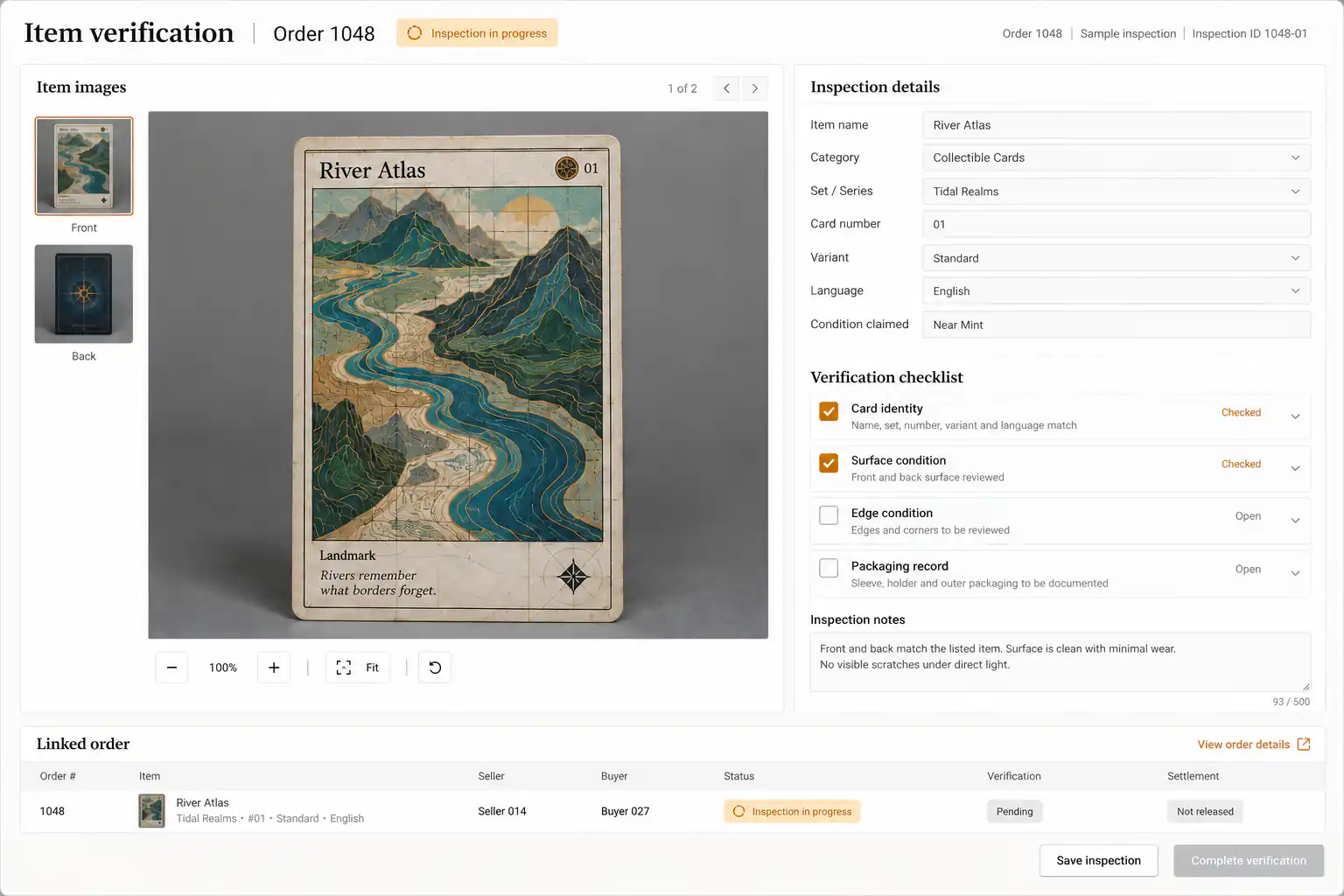
A fictional collectible and inspection checklist show how condition review connects to an order. The artwork, people, and records are invented; this is an illustrative interface, not a client screenshot. View full-size interface (new tab)
The operating challenge
The client initially considered packaged commerce products, but its verification, trading, and progression rules required deeper control of the workflow. The platform needed to keep the item, inspection record, order, and settlement state connected without presenting an unfinished inspection as a completed sale.
External services added practical constraints. Identity verification and shipping providers had onboarding requirements that a young business could not always meet. An integration plan therefore had to account for provider access and a workable test process, as well as API implementation.
The delivery decisions
Custom modules connected seller submission, physical verification, buyer confirmation, and payment release. Verification identifiers and status history gave platform staff a record they could follow alongside the commercial transaction.
Third-party identity verification supported account-level checks; the platform’s physical inspection process addressed the collectible itself. The team researched alternative providers when initial onboarding routes were unavailable and established a shipping-label test approach where a conventional sandbox was missing.
Browsing used processed thumbnails, while item detail could load the original image for closer examination. Redis and in-memory caching supported the application, with cache invalidation and consistency treated as part of the design rather than an invisible performance shortcut.
How the workflow holds together
An inspector records what was examined. A buyer then reviews the verified item within the transaction. Keeping those steps distinct prevents a successful inspection from being mistaken for the buyer’s acceptance or a completed seller settlement.
The modular .NET foundation let the team develop catalog, transaction, verification, and integration capabilities as related functional units. Delivery progressed from browsing and basic trading into verification and payment, followed by supporting product and search improvements. This kept the first release focused on a complete trading path.
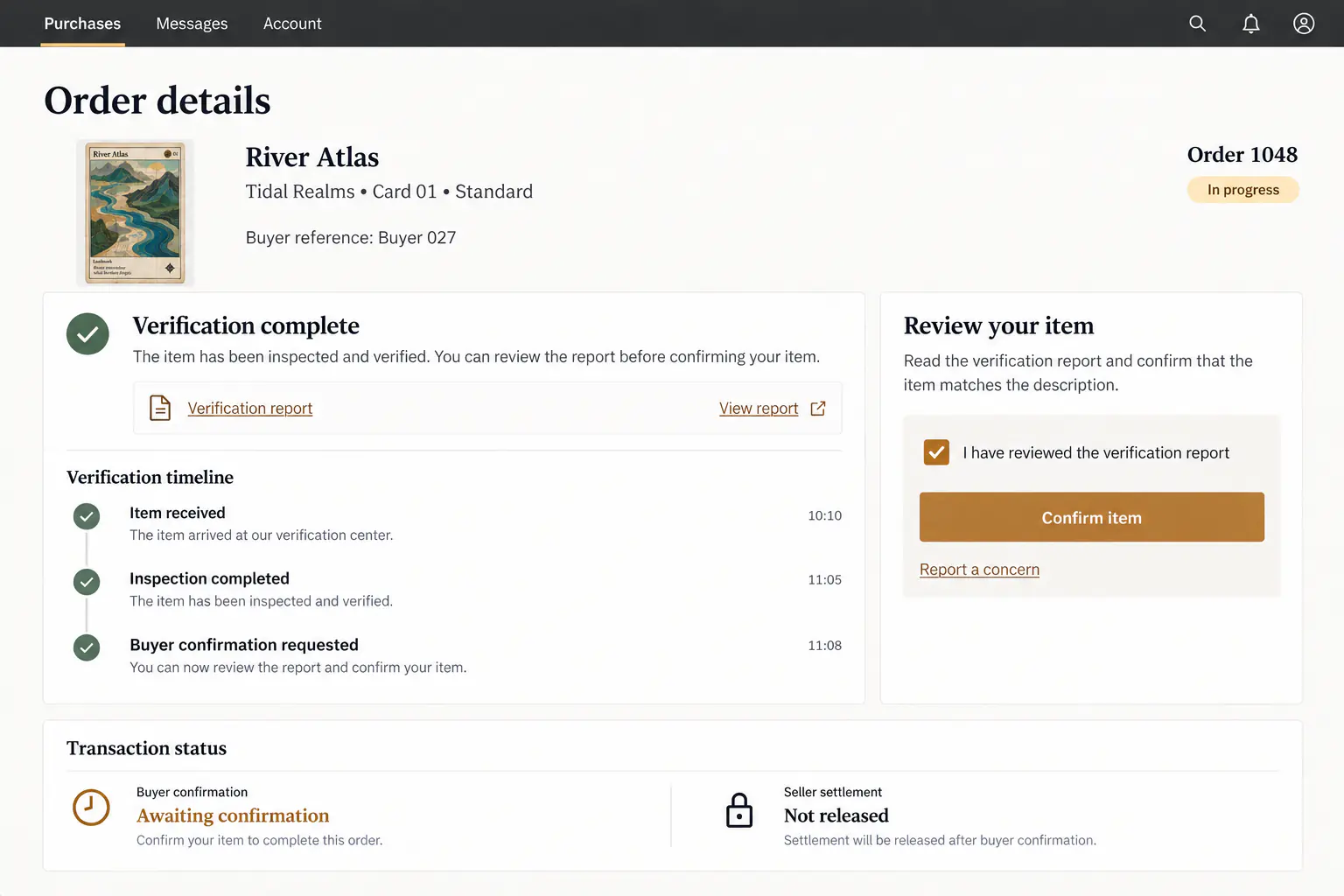
The same fictional item appears later in the workflow. Verification is complete, while buyer confirmation and settlement remain separate states. View full-size interface (new tab)
The delivered result
Orders and verification records could be looked up together instead of reconciled through separate spreadsheets and messages.
Inspection, buyer confirmation, and settlement became distinct steps in the transaction.
The custom marketplace provided a foundation for ongoing maintenance and preparation for wider promotion.
The first release was delivered, with search and site-readiness work supporting promotion. The team continues to maintain and extend the platform around the client’s trading workflow.
Case taxonomy
Discuss your project
Tell us how your business works and where your software needs to change.
Get in touch
Tell us what you need to build, modernize, automate, or augment with AI. We can start with a focused discussion or a no-risk 1-week trial.

“A fantastic company to work with.” After the initial rapid development project, American Shipping Co. kept two Shinetech developers embedded for nearly four years, supporting internal and external tools and new AI initiatives.
 CEO, American Shipping Co. - 5-star Google Review