Connected equipment
Monitoring, alerts, equipment records, and remote operations shared a facilities context.


Real Estate · Building facilities operations
A building-services provider brought equipment monitoring, energy use, remote operation, and maintenance work into a configurable facilities platform with web and mobile access.
The business context
For a facilities team, seeing an alarm is the beginning of a task. The next questions concern the equipment, its location, the people responsible, and what happened after the issue was found. Energy readings add another view of how that equipment is being used.
A building-services provider wanted a common software platform for these responsibilities. Shinetech developed equipment monitoring, energy management, and operational workflows that could adapt to different sites. Web and mobile access connected the shared view with the people attending to the building.
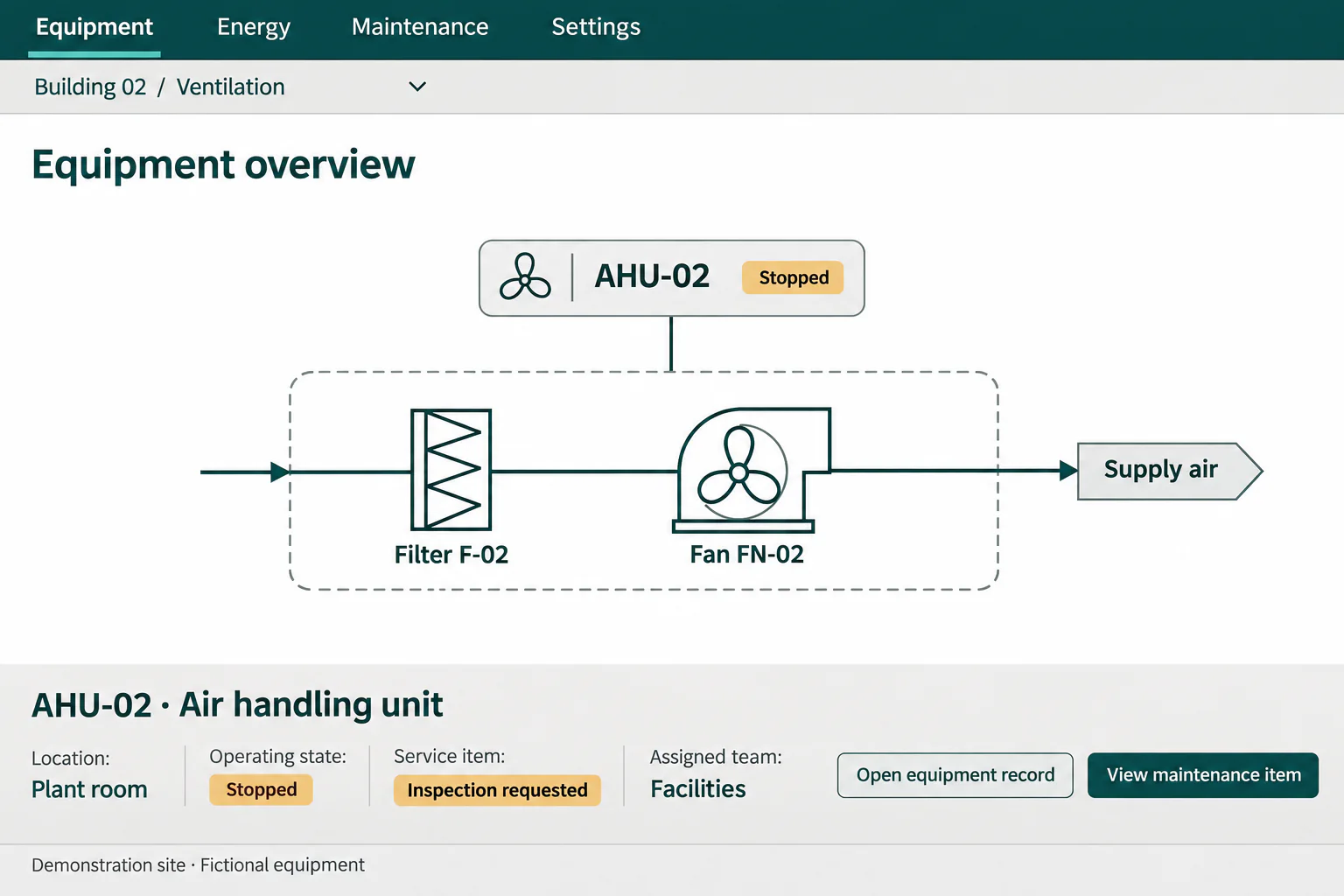
Concept reconstruction using fictional equipment and a demonstration site. The simplified equipment schematic illustrates a software view, not a control design or actual customer installation. View full-size interface (new tab)
The operating challenge
Different facilities bring different equipment and working practices. A platform needed a consistent way to connect devices and organize their data, while allowing the surrounding workflows to reflect the site. Treating every variation as a separate implementation would make later changes harder to manage.
Monitoring and maintenance also serve different purposes. A device state describes what the platform can see; an operational record helps people follow the work that results. Connecting both to the equipment makes it easier to investigate an issue and review its handling.
The delivery decisions
Standardized equipment onboarding supported monitoring, asset information, configurable alerts, and remote control. Operators could move from a site's systems to the equipment involved in a problem.
Energy metering and consumption analysis complemented device monitoring. Equipment-related maintenance and other operational work could be supervised through the platform, with mobile access supporting staff away from a desk.
Modular functions and a parent-and-site platform structure supported different operating processes. Private local deployment and public-cloud deployment gave the provider options for different customer environments.
The working detail
A reading becomes more useful when the facilities team knows what it measures and which period it covers. That context supports a discussion about equipment use and gives people a more concrete place to begin investigating an unexpected pattern.
The platform combined that energy view with equipment monitoring and work supervision. Site staff could use the mobile application to identify issues and access remote operations, while managers followed equipment-related activity through the shared system. The product entered use and continued to evolve through feedback.
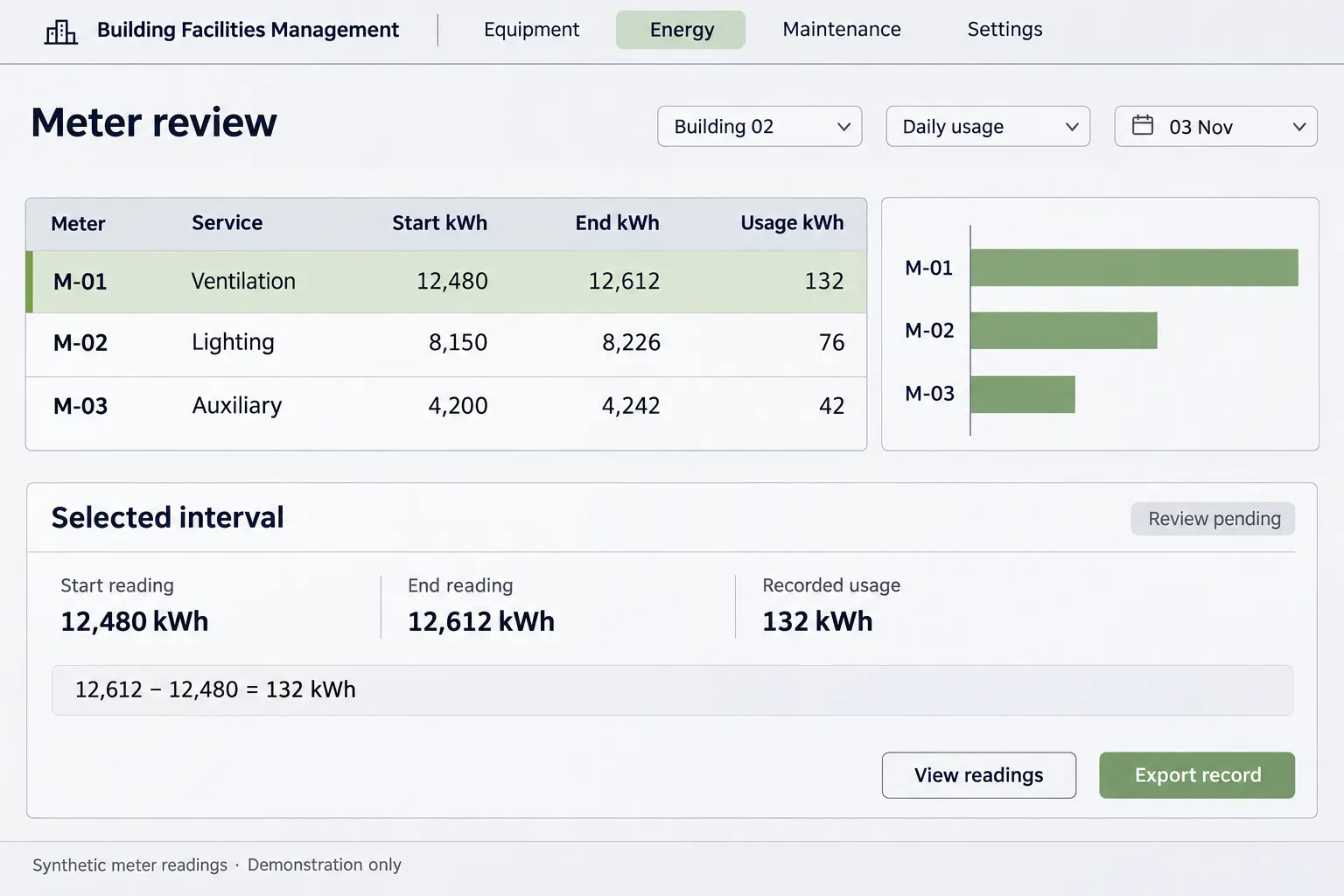
All readings and calculated usage are synthetic examples. They demonstrate an energy review interface and do not represent customer consumption, savings, or billing results. View full-size interface (new tab)
The delivered result
Monitoring, alerts, equipment records, and remote operations shared a facilities context.
Metering and consumption analysis added an energy view to equipment management.
Modular functions, site configuration, and deployment options supported varied operating environments.
The delivered platform was put into use, with subsequent updates shaped by feedback from its operating environments.
Case taxonomy
Discuss your project
Tell us how your business works and where your software needs to change.
Get in touch
Tell us what you need to build, modernize, automate, or augment with AI. We can start with a focused discussion or a no-risk 1-week trial.

“A fantastic company to work with.” After the initial rapid development project, American Shipping Co. kept two Shinetech developers embedded for nearly four years, supporting internal and external tools and new AI initiatives.
 CEO, American Shipping Co. - 5-star Google Review