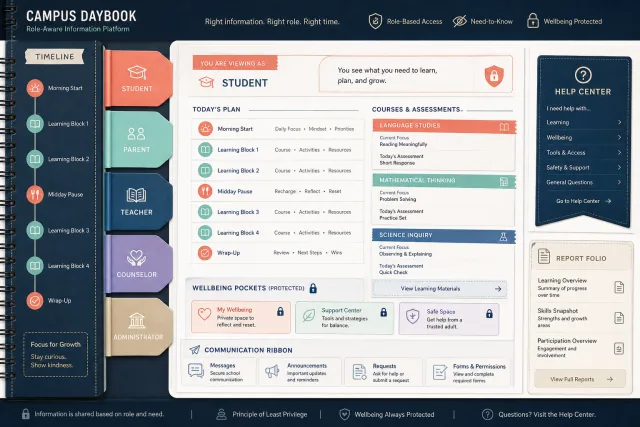
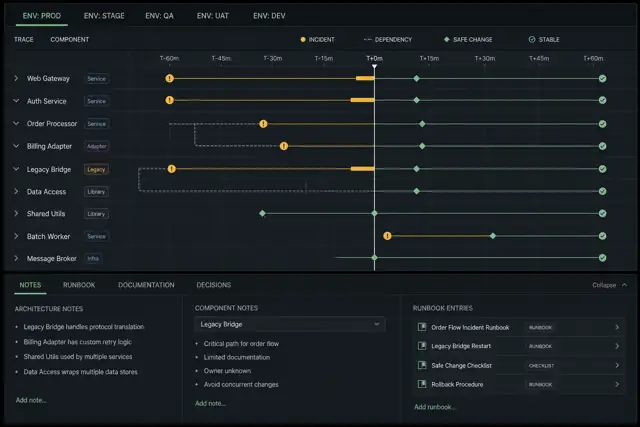
Pilot in use
The employee portal launched and supported the decision to continue.


Public Sector · Education administration
An IT services partner and Shinetech replaced aging education portals by recovering undocumented rules, proving the approach in an employee portal, and extending it to other user groups.
The business context
A public education authority needed to replace aging portals while retaining the business behavior accumulated over years of use. Employees, families, students, job applicants, and administrators had different tasks, but all depended on rules embedded in the existing applications.
Shinetech worked through the authority’s IT services partner. There was no requirements document comprehensive enough to guide a straightforward rebuild. The team had to recover behavior from old application code and database procedures, then turn it into working replacements that the client could review.
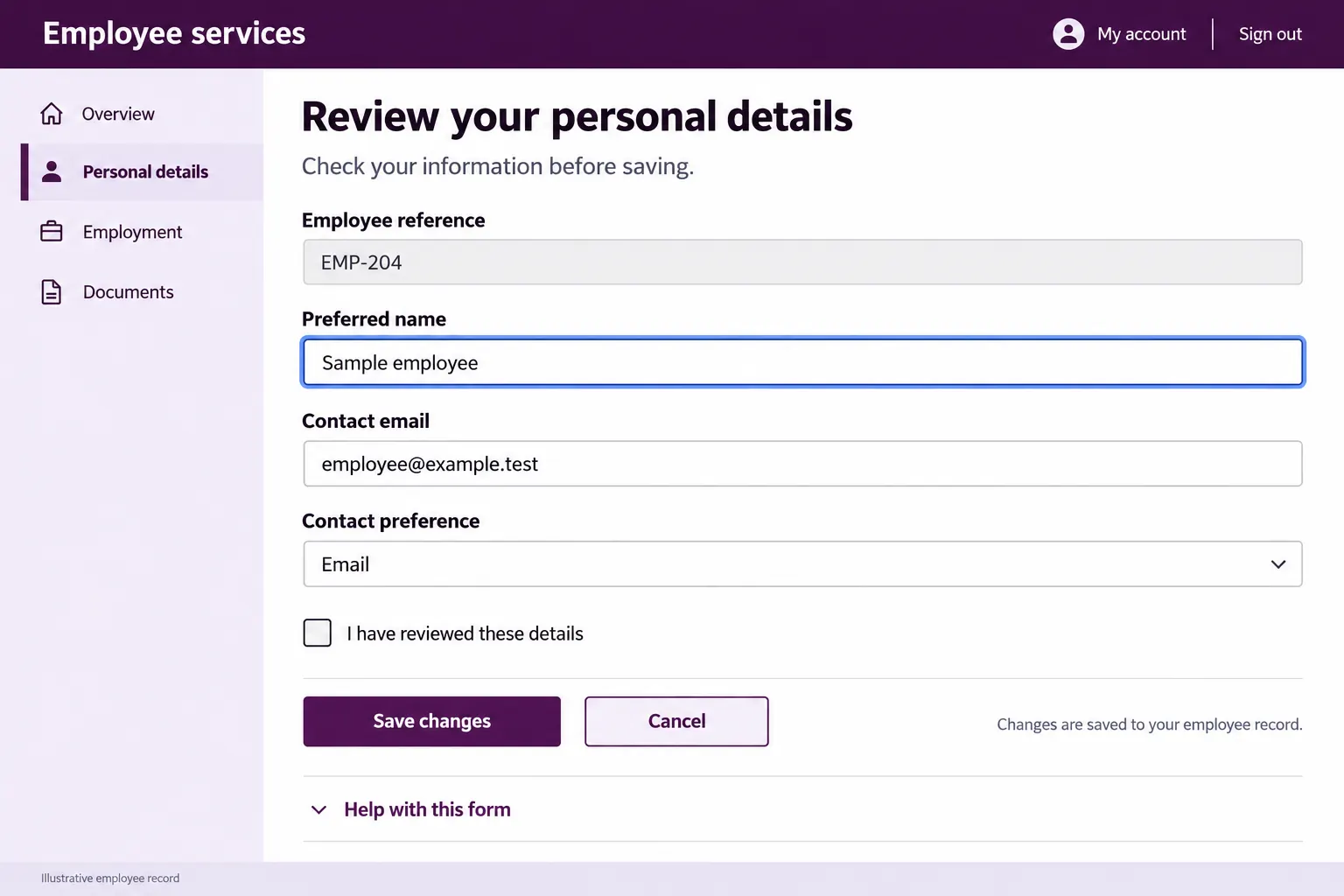
A fictional employee-record task illustrates the portal’s role-specific form experience. Fields and values are illustrative; this is not the authority’s interface. View full-size interface (new tab)
The operating challenge
Some workflows required complicated configuration and carefully prepared data before they could even be exercised in the old system. That made validation harder than comparing the appearance of two pages. A path that was rarely reached could still contain a rule essential to the business.
Compatibility problems added another layer: dependencies used by the older system did not all fit the new application stack. The team had to understand the behavior being preserved while investigating what needed to change underneath it.
The delivery decisions
The first portal served internal users and had a more manageable scope. It gave the team a place to prove data access, rule recovery, and the new application approach before extending the work across the wider portal estate.
Developers traced rules through the old code and stored procedures. Hard-to-trigger paths required deliberate configuration and test-data preparation. This work made the existing system a source of behavior to verify, rather than a collection of screens to imitate.
After the employee portal, the team moved into parent, student, and career services, along with administrator tools. Daily coordination and client code review kept the delivery partner involved in progress, requirements, and acceptance as the scope expanded.
How the workflow holds together
The employee portal established that the team could recover rules and deliver a replacement that went into use. Subsequent portals benefited from that experience, while still requiring their own workflow analysis. The reuse was in the method and technical foundation, not an assumption that every role did the same work.
The delivered scope also included accessibility improvements and single sign-on for administrators. These supported the different ways employees, families, students, applicants, and administrators interacted with the replacement portals. Each new portal still required its own rules to be understood and reviewed.
The delivered result
The employee portal launched and supported the decision to continue.
Parent, student, and career portals followed, together with administrator tools.
Accessibility improvements and administrator single sign-on formed part of the delivered scope.
The employee portal established the first working replacement. Parent, student, career, and administrator applications extended the delivery before the engagement concluded.
Case taxonomy
Discuss your project
Tell us how your business works and where your software needs to change.
Get in touch
Tell us what you need to build, modernize, automate, or augment with AI. We can start with a focused discussion or a no-risk 1-week trial.
“A fantastic company to work with.” After the initial rapid development project, American Shipping Co. kept two Shinetech developers embedded for nearly four years, supporting internal and external tools and new AI initiatives.
 CEO, American Shipping Co. - 5-star Google Review