Complex modules
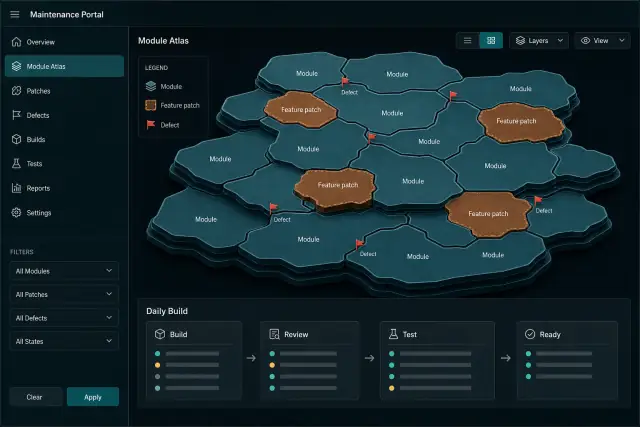
Features and defects crossed multiple Java components and integration points.


Payment software case study
A mature electronic-payment product needed ongoing feature work and defect resolution without transferring business analysis or core security ownership away from the client.
The situation
The product contained a complex modular Java architecture and an established body of business behavior.
The client needed reliable capacity for maintenance, new functions, new modules, and defect resolution while retaining control of business analysis and core security work.
The challenge
Maintenance and new delivery shared the same architecture, build process, and quality responsibilities.
Features and defects crossed multiple Java components and integration points.
Maintenance, new functions, and new modules all competed for delivery attention.
Engineering contribution had to respect client ownership of analysis and core security.
The solution
Daily coordination connected scoped engineering work with the product's review, build, and test practices.
Trace affected Struts, Spring, Hibernate, EJB, and build components before changing behavior.
Implement approved functions, modules, maintenance tasks, and defect fixes.
Keep business analysis and core security decisions with the responsible client team.
How the work was structured
The team learned the modular product architecture and the dependencies surrounding each requested change.
Feature work and defect resolution moved through shared review and testing rather than bypassing the established product process.
Daily coordination kept scope and ownership visible between the extension team and client specialists.
Trace the module and its dependencies.
Make the approved feature or defect change.
Check behavior against product expectations.
Move the change through build and test.
The result
The documented engagement supported a mature Java platform while the client retained business-analysis and core-security ownership.
Changes were made with awareness of the platform's modular architecture.
The team handled both defect resolution and approved new development.
Critical business and security responsibilities remained with client specialists.
Case taxonomy
Add capacity without losing product context
Get in touch
Tell us what you need to build, modernize, automate, or augment with AI. We can start with a focused discussion or a no-risk 1-week trial.

“A fantastic company to work with.” After the initial rapid development project, American Shipping Co. kept two Shinetech developers embedded for nearly four years, supporting internal and external tools and new AI initiatives.
 CEO, American Shipping Co. - 5-star Google Review